Sample data — not a client documentThis is a sample. The firm name, staff numbers, tool stack, findings and timelines are invented, and it describes no real firm. Pricing is left out.

Whitfield & Cross Injury Law

Practice Area: Personal InjuryPrepared By: SourcePro ConsultantsDate Delivered: August 21, 2026
SourcePro Consultants

Systems & Tool Stack Diagnostic

Confidential - Prepared Exclusively for Whitfield & Cross Injury Law
Firm NameWhitfield & Cross Injury Law
Primary Practice AreaPersonal Injury
Total Staff12
Number of Attorneys4
Number of Support Staff8
Current Case Management PlatformClio Manage
Current Intake / CRM PlatformClio Grow
Approximate Monthly Tech Spend$1,240 / month
Primary Operational ConcernIntake conversion and unclear task ownership after a matter opens

This document was produced following your Legal Systems Health Check on August 14, 2026. It reflects your firm's current operational state, identifies gaps in your technology and workflow design, and provides a clear path forward. Everything in this document is specific to your firm - nothing here is a template recommendation.

The following analysis covers every tool currently in your firm's tech stack. Each tool is evaluated for what it is capable of doing versus what your firm is actually using it for. Gaps identified here represent either underutilized features you are already paying for or missing capabilities that are costing your team time.

Tool NameFeatures AvailableFeatures Currently UsedGap Identified
Clio GrowIntake forms, pipeline tracking, automated workflows, e-signature, appointment booking, email marketingIntake forms and manual pipeline updates onlyNo automated follow-up; pipeline stages updated by hand after each call
Clio ManageCase management, task workflows, document storage, billing, time tracking, court calendaring, client portalCase records, billing and document storageTask templates and the client portal are unused
Standalone scheduling toolAppointment booking, calendar syncBooking links emailed manuallyDuplicates booking already included in Clio Grow

Our recommendations for these tools, and what they would cost, are in What This Means for Your Firm below.

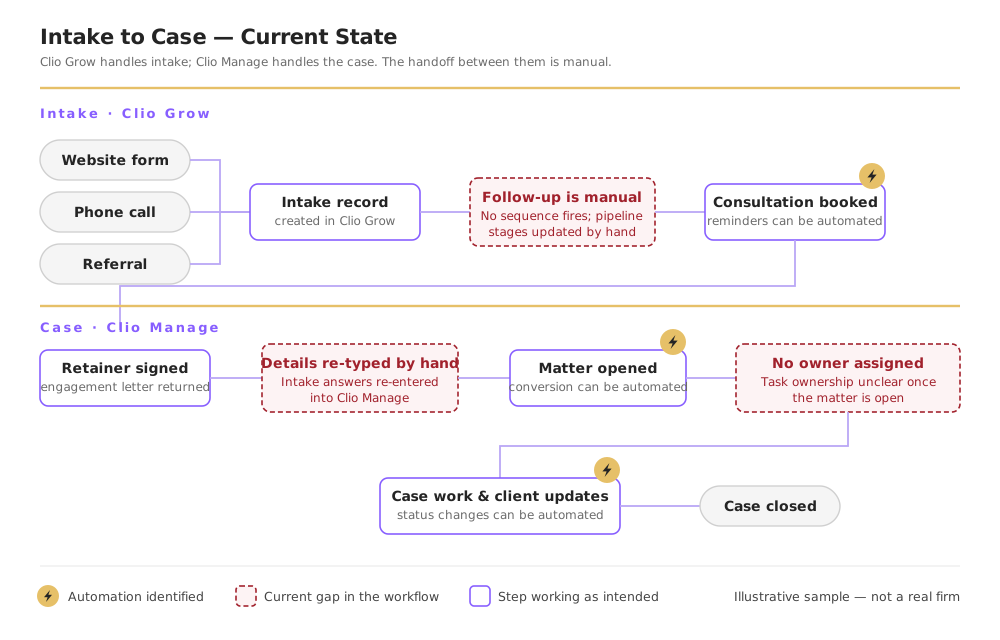
The diagram below maps how work moves through your firm from first contact to case close. Every handoff, decision point, and automation trigger is documented. Nodes marked with a lightning bolt icon indicate where an automation has been identified. Nodes marked in red indicate a current gap in your workflow.

Whitfield & Cross Injury Law operational workflow diagram
Select the image to open it full size in a new window.

This diagram is not a generic template. It is built specifically from your Health Check session and reflects how work actually moves through your firm today - and how it should move after implementation.

Your website is where many new inquiries start. This section covers how the site captures an inquiry and how that inquiry reaches your intake team, because a lead lost before it reaches intake never appears in any intake report.

Website Addresshttps://whitfield-cross.example
Platform / HostTemplate site builder
Managed ByOutside web designer, updated a few times a year
Contact FormsOne contact form, same form for every practice area
How Inquiries Reach IntakeForm emails a shared inbox; intake re-enters it into Clio Grow
Online BookingNone on the site
Chat or Text on the SiteNone
Mobile ExperienceReadable, but the phone number is not tap-to-call
Page SpeedSlow on mobile; large uncompressed images on the home page
Analytics & Call TrackingAnalytics installed; no call tracking, so phone leads have no source
Gaps IdentifiedEvery website inquiry is retyped into Clio Grow, which delays the first response and drops the lead source. Phone calls from the site cannot be traced to a campaign.
RecommendationsSend the contact form straight into the intake system as a record. Add practice-area landing pages with their own forms, a booking link, tap-to-call, and call tracking so every inquiry keeps its source.

These automations cover the path from a first inquiry on your website to a booked consultation, so nothing depends on someone noticing a new lead.

What is an automation? An automation is a pre-built rule that tells your software to take a specific action when a specific event happens - without anyone on your team doing it manually. Automations eliminate repetitive tasks, reduce human error, and ensure nothing falls through the cracks regardless of who is working that day.

Example Automations from Your Tool Stack

The following are real examples of automations your firm can build inside your current tools. These are not hypothetical - they run inside your existing platforms today.

Consultation Scheduled - Intake Sequence

Trigger

Prospective client submits the intake form and books a consultation through Clio Grow.

What Happens Automatically

1Matter status changes from "New Inquiry" to "Consultation Scheduled."
2Prospect receives a confirmation email with appointment details and a pre-consult questionnaire.
3Task is created and assigned to the intake paralegal to review the submission before the call.

Result: Zero manual steps between form submission and call preparation. The intake paralegal walks into every consultation already briefed.

Automation NameTriggerAutomated ActionToolBusiness ImpactPriority
New Lead ReceivedIntake form submittedCreate matter, tag lead source, assign intake ownerClio GrowPrevents unassigned inquiries going coldHigh
Consultation Reminder SequenceConsultation bookedAutomated email and SMS reminder at 24 hrs and 1 hr before the callClio GrowReduces no-shows and increases show rateHigh
Priority Key: High = Build first, highest time and revenue impact. Medium = Build in phase 2. Low = Nice to have, build last.
Most firms do not lose cases at the pitch. They lose them in the gap between an inquiry arriving and somebody answering it. A Customer Relationship Management system for a law firm exists to close that gap, and most of the ones firms already own were never configured to.

Current Intake / CRM PlatformClio Grow
Lead SourcesGoogle Ads, website form, attorney referrals, past clients
Inquiries per MonthAbout 90
Typical First Response TimeSame day for forms; next morning for calls after 5pm
After-Hours CoverageVoicemail only
Follow-Up When There Is No ReplyOne call and one email, then the lead is left open
How Consultations Are BookedBooking link emailed by the intake specialist after first contact
Consultation Show RateRoughly 7 in 10 booked consultations attend
How Retainers Are SignedElectronic signature from Clio Grow
Handoff to Case ManagementMatter converted to Clio Manage by hand after signing

Where Leads Are Being Lost

Leak PointWhat We FoundStatusWhat the System Should Do
The call nobody answeredAfter-hours calls go to voicemail and are returned the next morning.LeakingAn unanswered call triggers a text back within seconds, so the conversation starts before the firm has even picked up the message.
The single follow-upOne call and one email, then no further contact.LeakingA sequence runs for days across text, email and voicemail until they reply, book, or opt out. Following up stops depending on somebody remembering.
The scheduling round tripA booking link exists but is sent only after a first conversation.Partly coveredA booking link sits inside the first message, showing real availability. Scheduling becomes one step instead of a negotiation.
The consult nobody reminded them aboutNo automated reminder before the consultation.LeakingConfirmations and reminders send themselves, and the appointment appears in the calendar the firm already uses rather than in a second one.
The retainer sitting unsignedRetainers go out for electronic signature from the record.CoveredThe agreement goes out for electronic signature from the record itself, and its status is visible without anyone asking.

Intake Assessment Summary: Inquiries are captured reliably, but the firm loses ground in the first hour and after the first follow-up. Calls after 5pm wait until morning, follow-up stops after two attempts, and consultation reminders are not automated. Retainers are already signed electronically, so the fastest gains are in response and follow-up rather than at signing.

These automations cover the handoff from a signed retainer into your case management system and the work that follows, so a new matter starts without re-entry.

Example Automations from Your Tool Stack

The following are real examples of automations your firm can build inside your current tools. These are not hypothetical - they run inside your existing platforms today.

Retainer Signed - Case Conversion

Trigger

Prospect signs the engagement letter and pays the retainer deposit.

What Happens Automatically

1Matter converts and syncs to Clio Manage as a new active case.
2Case is assigned to the responsible attorney.
3Client receives a welcome email with their client portal login.
4Initial case task checklist is created and assigned.

Result: No manual data re-entry and no separate case creation step. The client is onboarded and the attorney notified before anyone touches a keyboard.

Automation NameTriggerAutomated ActionToolBusiness ImpactPriority
Missing Document Follow-UpDocument task overdue by 48 hrsReminder to the client and a notification to the assigned staff memberClio ManageReduces cases stalled waiting on client documentsMedium
Priority Key: High = Build first, highest time and revenue impact. Medium = Build in phase 2. Low = Nice to have, build last.

Once a retainer is signed, the matter moves into your case management system. This section covers how that system is set up today and where the work still depends on someone remembering rather than on the system.

Current Case Management PlatformClio Manage
Practice AreasPersonal Injury
Active MattersAbout 140
Case StagesDefault stages; not matched to how the firm runs a case
Task TemplatesNone; tasks created by hand per matter
Deadline CalendaringEntered manually by each case manager
Document HandlingSaved to Google Drive and uploaded again to Clio Manage
Client CommunicationEmail and phone; the client portal is unused
ReportingSpreadsheet updated weekly by the office manager
Gaps IdentifiedNothing in Clio Manage tells the team a file has gone quiet, and deadlines depend on each case manager entering them correctly.
RecommendationsRebuild case stages around the firm's actual process, add task templates per stage, calculate deadlines from anchor dates, and move case documents into Clio Manage only.

The firm's own books, kept separate from client money in trust. We did not review your accounting software in this Diagnostic.

Accounting SoftwareTo be determined

The systems identified in this document generate valuable operational data every day. During implementation, SourcePro Consultants can build custom dashboards that transform this data into real-time visibility for attorneys, firm leadership, intake teams, and operations managers.

The dashboards below represent the highest-value reporting opportunities based on your current technology stack and workflow design.

📊

Intake & Lead Conversion Dashboard

Purpose: Show where new business comes from and how effectively inquiries convert into retained clients.

  • Total leads by source
  • Consultation booking rate
  • Consultation show rate
  • Retainer conversion rate
  • Average time to first contact

Primary Users: Managing Partner, Intake Manager, Marketing

Business Impact: Reduce intake leakage and improve follow-up accountability.

Recommended Build Phase: Implementation Phase 1
📁

Case Management & Workload Dashboard

Purpose: Show active cases, staff workload, bottlenecks, upcoming deadlines and case progression.

  • Cases by stage
  • Cases by attorney or paralegal
  • Aging cases
  • Overdue tasks
  • Upcoming deadlines

Primary Users: Managing Partner, Practice Manager, Attorneys

Business Impact: Prevent missed deadlines and reduce case stagnation.

Recommended Build Phase: Implementation Phase 1
📈

Executive Visibility Dashboard

Purpose: Give leadership one source of truth for operational performance and growth trends.

  • New matters opened
  • Cases closed
  • Revenue by month or practice area
  • Average time to close
  • Top referral sources

Primary Users: Managing Partner, COO, Operations Director

Business Impact: Improve forecasting, hiring decisions and profitability visibility.

Recommended Build Phase: Optimization Phase

What This Means for Your Firm

Potential dashboards identified3
Recommended for initial implementation2
Recommended for optimization phase1
Manual spreadsheet reporting eliminated4

Systems only run as well as the people assigned to them. The table below maps each role to its current owner and core responsibilities, flags where one person is carrying more than one role, and recommends what should change.

RoleCurrent Owner(s)Core ResponsibilitiesWorkload FlagRecommendation
Records & Mail CoordinatorUnfilledScans and files incoming mail Logs court notices Handles records requests—New hire needed
Intake SpecialistD. MorganAnswers new inquiries Books consultations Updates the Clio Grow pipelineAlso covering front desk and consultation remindersSplit out
Case ManagerL. Patel, S. OwensOpens matters in Clio Manage Requests client documents Tracks case deadlines—Keep as-is
Paralegal / Legal AssistantJ. Rivera, K. Brooks, A. Nguyen, T. WalshDrafts correspondence and pleadings for attorney review Gathers medical records and bills Prepares demand packages Supports attorneys with filings and hearings—Keep as-is
Office ManagerR. HughesVendor accounts Payroll support Daily mail and court noticesAbsorbing billing follow-up and records requestsSplit out
Current StructureEight support staff, with intake, mail and records work spread across whoever has capacity that day. Two people are carrying work from roles that are not formally assigned to anyone.
Recommended StructureMove front desk coverage out of intake, and give mail, court notices and records requests to one dedicated coordinator so the office manager returns to operations.
Staffing Gap IdentifiedApproved but unfilled: records and mail coordinator

These findings sit outside your core tools but cost your team time every week. Each one covers how the work happens today, what is missing, and the recommended fix.

Incoming Mail and Court Notices

Systems InvolvedPhysical mail, Shared email inbox, Clio Manage
Current ProcessMail is opened at the front desk, scanned, and emailed to a shared inbox. Someone forwards it to the responsible attorney when they see it.
Gap IdentifiedNo alert when a court notice arrives, and no task or deadline is created in Clio Manage.
Manual BurdenShared inbox checked twice a day by the office manager, with no alert
Recommended FixScan notices straight into the matter in Clio Manage, with a review task assigned to the case manager and a deadline check the same day.
Automation FeasibilityMedium
Addressed InCase Management Workflow, priced in the implementation scope below

Document Storage Duplication

Systems InvolvedClio Manage, Google Drive, Dropbox
Current ProcessSigned documents are saved to a Google Drive case folder, then uploaded again to the matter in Clio Manage.
Gap IdentifiedThe same document is filed twice at every status change, and the two copies drift apart.
Manual BurdenCase managers file every signed document twice
Time CostPer case, at every status change
Recommended FixMake Clio Manage the single system of record for case documents. Keep Google Drive for internal files that do not belong to a matter.
Automation FeasibilityHigh
Ruled OutDropbox looks like a third copy but holds only marketing files shared with an outside designer. It is not case storage and needs no change.
Addressed InCase Management Workflow, priced in the implementation scope below

Questions raised by your firm's leadership during the Diagnostic, answered here so the answers stay with the document.

Will staff lose time while this is being built?

The scope estimates 8 weeks in total. Training + SOPs is its own workstream at the end, so staff learn the finished system once rather than relearning after every change.

TimelineAsked by Office Manager

Do we need to replace Clio?

No. Clio Manage is marked Keep in the tech stack review. Most gaps found are features already included in the current plan that are not switched on.

Tooling

What happens to the documents already in Google Drive?

Nothing is moved in bulk. New case documents go to Clio Manage only, and existing folders move matter by matter as cases are reopened, so every file is checked on the way.

RiskAsked by Case Manager

Once everything is built, you can add protection for the firm's accounts and files, and ongoing support from SourcePro. Both are optional.

Ongoing Support From SourcePro

After your systems are implemented, SourcePro can stay on as your technology partner. Ongoing technology support and includes the cybersecurity service above. It also covers the work that comes as the firm grows: building dashboards, writing your standard operating procedures (SOPs) as you add a team, and adjusting your systems as the practice changes. It is optional.

The tools we recommend replacing and the tools we recommend getting more from.

Tools to replace1
Tools to optimize1

Why We Recommend Replacing

Current ToolReplace WithWhy
Standalone scheduling toolClio Grow booking (already included in the current plan)The firm is paying twice for the same booking function, and the two calendars are not connected — a consultation booked in one is invisible in the other. Clio Grow already includes booking on the plan the firm holds, so moving it there removes the $29/mo and puts the appointment on the same record as the inquiry.

Tools to get more from: Clio Grow. You already pay for these, and the gaps identified above can be closed inside them.

Based on everything identified here, the following is the scope of work required to implement your firm's operational system. This is not a generic estimate - it reflects your specific tool stack, workflow gaps, and automation inventory.

Build AreaScope of WorkIncluded DeliverablesEst. Timeline
CRM / Intake OptimizationRebuild the intake pipeline, lead source tracking, consultation workflow and lead ownership rules.Pipeline stages, intake forms, routing logic, consultation sequence2 weeks
Case Management WorkflowConfigure case stages, task templates, role ownership and internal handoffs.Case lifecycle structure, task checklists, team workflow rules2-3 weeks
Automation BuildoutBuild the high-priority automations from the inventory and test for accuracy.Automated reminders, matter status changes, client communication triggers2 weeks
Reporting / VisibilitySet up the reporting dashboards and key metrics.KPI dashboard, reporting fields, leadership visibility view1 week
Training + SOPsDocument the workflows and train staff on the updated system.Workflow SOPs, training session, usage guide1 week
Total Timeline8 weeks
Diagnostic Credit Applied:- $597
Payment structure and project timeline will be confirmed in your implementation proposal.
With your purchase you receive a free cybersecurity check and a free 30-minute consultation on how we secure a law firm. You receive both whether or not you add the security package.

This scope is valid for 30 days from the delivery date.

This document is the first step toward implementation. When you are ready to build, your $597 Diagnostic investment is credited in full toward your implementation project.